
35 miles walking through ancient Japanese history
American naturalist John Muir sums up my feelings when hiking in the mountains:
“We are now in the mountains and they are in us, kindling enthusiasm, making every nerve quiver, filling every pore and cell of us.”
My “pores and cells” were treated to eight days trekking in Japan through mesmeric Cedar forests interwoven with gentle rivers, meandering streams and thunderous waterfalls. Over centuries every step of my route has been trodden by emperors, monks, warriors and commoners. Some did it to find healing. Others thought the Kumano would grant them rebirth, enlightenment and salvation whilst some did it simply to immerse themselves in the meditative power of nature.
Thanks to Walk Japan, a company who organise a variety of guided and self-guided walking tours, I explored a network of footpaths high up in the mist covered mountains where the normal sounds of humanity are silent. I want to share my physical and spiritual adventure with you.
The Kumano Kodo Pilgrimage takes you on an odyssey through thousands of years of Buddhist history whilst staying in remote temples and ancient inns, eating every type of traditional Japanese food, experiencing naked ritual bathing and meeting the local folk who gladly share their knowledge guiding you deep into the soul of ancient Japan.
Kumano is a sacred region located within Japan’s Kii Peninsula and Kodo refers to the ancient interlocking roads and paths that connect the three grand shrines of Kumano.
I shared this experience with my wife, Jo, my travelling buddy of 35 years, and we both enjoyed being the only Brits on the trip. The rest of our 12 strong party came from Australia, America, New Zealand and Germany from all backgrounds including lawyers, psychiatrists, yacht crew, doctors, farmers, bank workers and an optometrist.
I’m not quite sure how our eclectic band of adventurers compares to the pilgrims of the past but there is a great synergy as the Kumano Kodo has attracted a diverse crowd over thousands of years from Shinto to Buddhist followers, former emperors and pilgrims from all levels of Japanese society.
What makes this area so special is that the trail links hugely significant sacred sites – the Kumano Sanzan shrines, Koyasan and the Grand Shrine of Ise and it is one of only two pilgrimage routes on UNESCO’s World Heritage list, the other being the Camino de Santiago in northern Spain.
Day One
A thrilling adventure shared with new friends is one of life’s greatest pleasures and I couldn’t wait to meet my fellow pilgrims.
We bonded at a restaurant in downtown Osaka sitting on the floor devouring raw tuna, crab, chicken and as many drinks as we wanted. It was a wonderful evening full of laughter and anticipation and it gave us our first glimpse of the man who would steer us through the week ahead.
We all came to adore our tour guide, Tom, with his nurturing nature, huge knowledge and soothing sense of humour which gelled perfectly with the tone and texture of what was to come.
Day Two
We were up early, bulk buying an eight-day supply of energy bars at the 7-Eleven before heading into the remote mountains away from urban convenience.
We left Osaka by train and an hour and a half later we were in a cable car heading to Mount Koya. In early March the temperature contrast between the city and the mountains is stark and with a sharp intake of cold air we started our trek crunching through the snowy paths around the outskirts of Koyasan.
This specific trail was established for women to give them access to views of the significant mountains sites without them having to enter areas formerly forbidden for women.
After a couple of hours, we entered the hypnotic Koyasan Forest Cemetery which is 2km long and has more than 200,000 gravestones. This is one of the most significant destinations for pilgrims as Kobo Daishi’s mausoleum, the founder of Japan’s Shingon Buddhist sect is located here.
I was still trying to process the size and significance of the cemetery when time came to move on and find our accommodation for the night.
Of anywhere we stayed, this was the most memorable. It was a temple known as a shukubo pilgrim lodging (run by monks). We were greeted by monks who had prepared a lavish vegetarian feast with miso soup, pickled vegetables, three different scented tofu, egg yolk picked in miso and much more.
We dressed for dinner in the traditional Yukata, a unisex, cotton, kimono-like garment provided everywhere we went. Our room was typically minimalistic with two futons on the floor and an air conditioning/heating unit that was cranked up to max heat mode in an otherwise freezing temple.
We headed out for a chilly walk around the deserted town knowing we had to be back before the temple curfew at 9pm. An early night was needed as our alarms were set for 5:45am to be ready for another day of unforgettable experiences.
Day Three
At 6:30am we were sitting in the temple’s dark inner sanctum for an optional morning prayer service. Surrounded by comforting candles and lanterns we were invited to put incense into a cauldron of burning embers and chant the Heart Sutra, a popular Buddhist sutra which includes concepts of emptiness, wisdom and attaining nirvana.
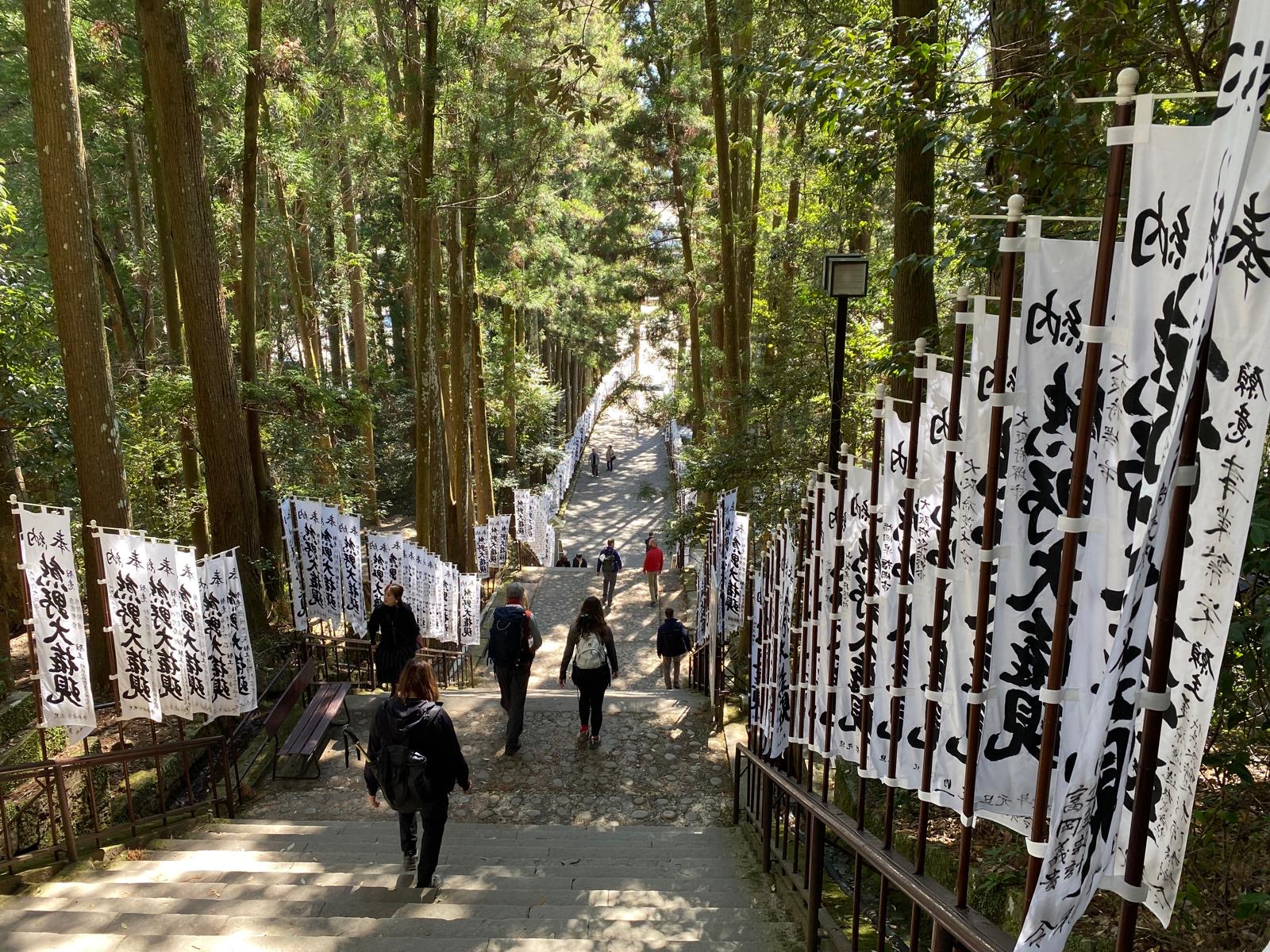
This was worth every bit of the early alarm call and after a traditional breakfast and lashings of Japanese tea we headed off to explore the many temples of Koyasan before being bussed to Takijiri-Oji and our first big climb.
The short but steep ascent was softened by the sound of the Bush Warbler announcing that Spring had arrived. The trail soon levelled out for a comfortable few hours walking before arriving in a small rural hamlet of Takahara.
We stayed at a delightfully run family inn where we enjoyed another local feast with endless grilled fish and experienced our first onsen. This is a naturally occurring hot spring warm water pool and there is a strict etiquette on how to bathe.
They are single sex. Before entering you must strip naked and wash thoroughly, then enter the warm pool. They are a place for calm reflection, quiet relaxation and soothing conversations. They aren’t a place for cold beers, mobile phones or loud music.
I was a little self-conscious on my first dip but after that I couldn’t wait to relieve my sore legs at the end of another day’s hiking.
Day Four
We were waved off by the whole family as we left our cosy inn and headed higher and higher in the mountains.
We trekked for 8 miles enjoying steep climbs and challenging descents accompanied by stunning mountain views. Along our journey Buddhist statues, well-worn distance markers and redundant tea houses provided echoes from the pathway’s ancient history and a welcome excuse to “take five” before the next leg.
Our packed lunch included a leaf wrapped rice ball which kept us going towards our destination of Yunomine Onsen. This is a hugely significant place as the onsen thermal hot spring baths have been used for centuries for special cleansing rituals ahead of the next day’s visit to the grand Hongu Taisha Shrine hence the need for purification.
That evening I treated myself to an extra-large, cool Japanese beer as we arrived at our stunning hotel. We had a spacious bedroom complete with balcony and a sumptuous evening meal cooked with local ingredients including Wagyu beef cooked in broth bowls, sea slug, grilled fish, sashimi and even horse salami. (vegetarian options are also available).
Day Five
This day will be forever remembered for two remarkable views.
Having warmed up with a gentle ramble through isolated villages and tea plantations we took a break at a view point where a woman was playing a koto, a Japanese harp. The misty mountains had their own theme tune thanks to this dreamy, ethereal instrument.
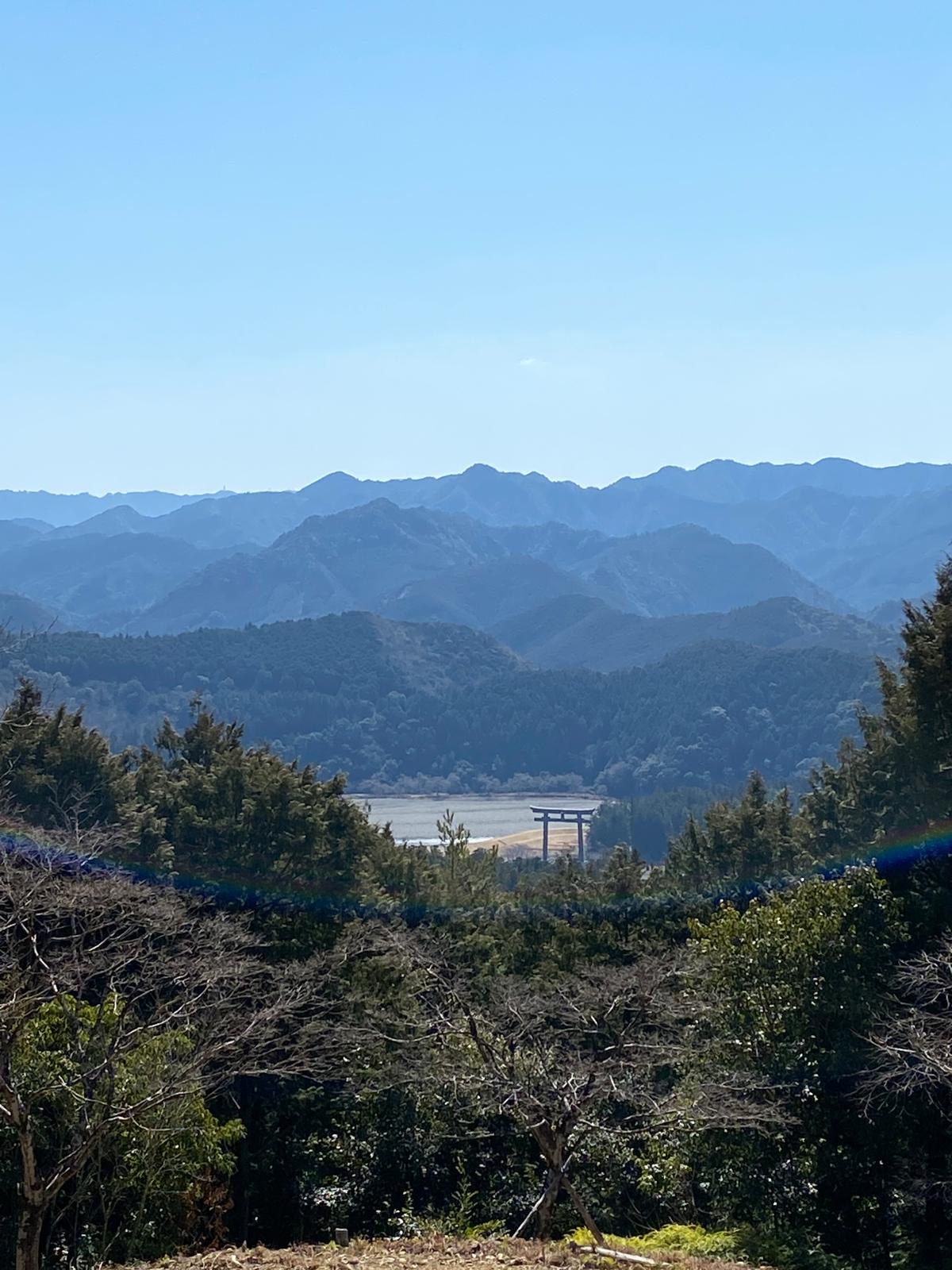
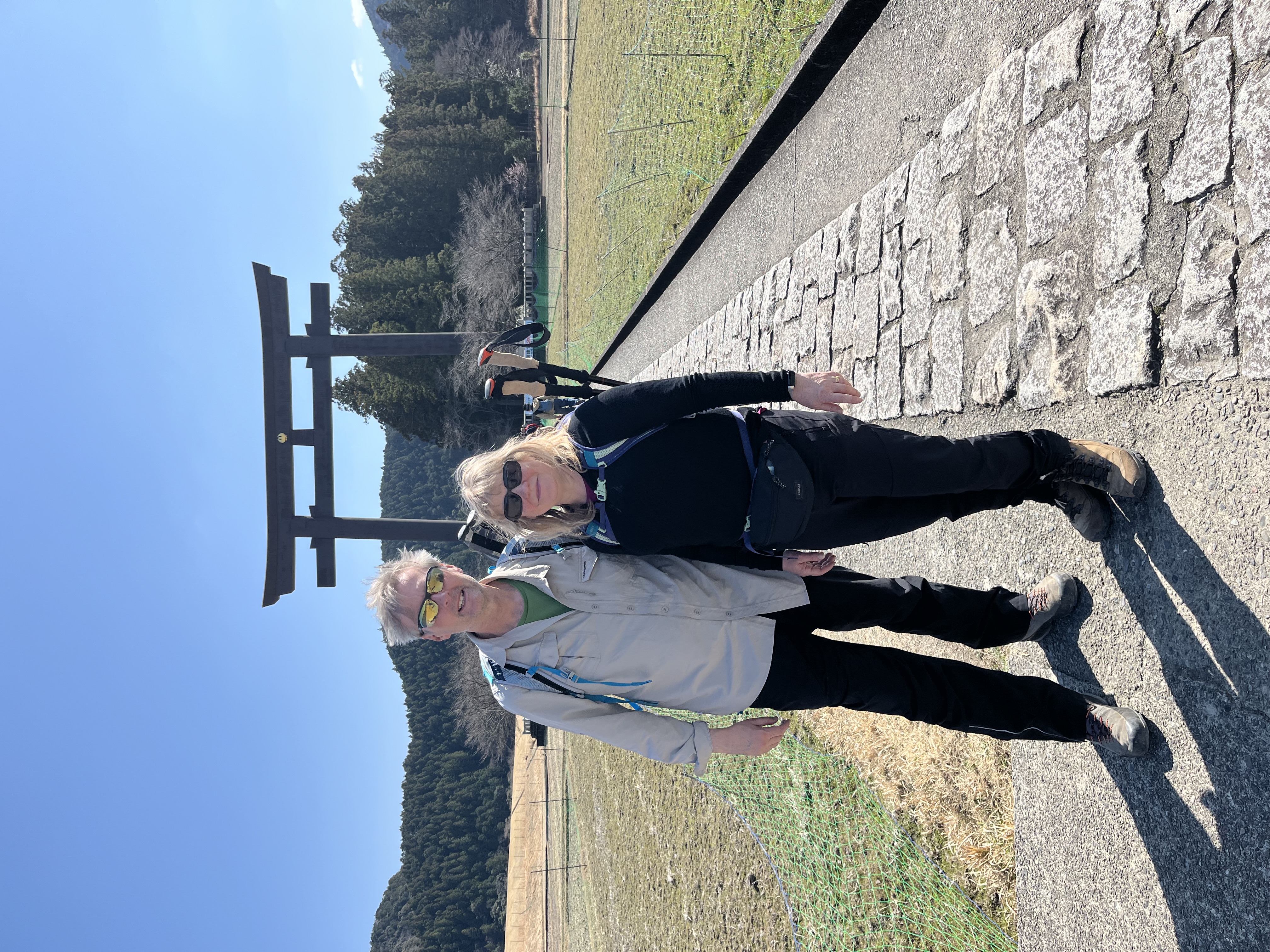
Having refuelled on the mystical, musical energy we walked through the “Forest of Rebirth” towards our second vista and our first view of the giant torii shrine gate at Hongu Taisha. This 33.9m structure guided us down to the Hongu Taisha Shrine, one of the three sacred shrines that link the Kumano journey together.
I wolfed down a local chicken curry lunch complemented with a chocolate ice cream before heading back to the hotel over a steep but rewarding pass. That night we feasted on another local banquet of beef, deep fried taro potato and pork and vegetable miso broth hotpot.
Day Six
The rain decided to put in an appearance today but as our wonderful guide, Tom, would often remind us, the difference between a tourist and a pilgrim is that a pilgrim needs to suffer just a little bit.
We slowly made friends with our first mountain of the day called “small cloud”, aware the next day we were going to have to make peace with its big brother “big cloud”.
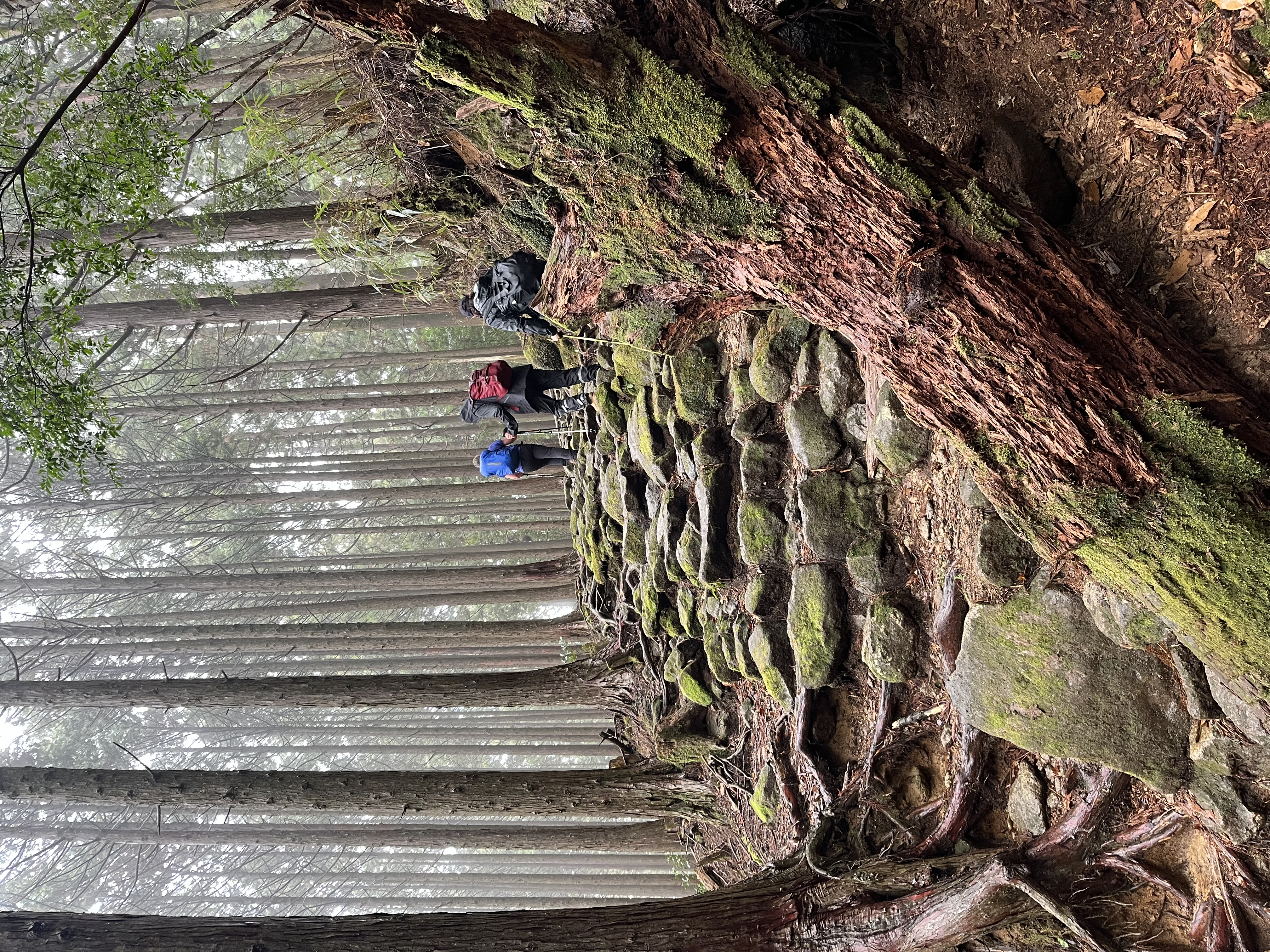
This was our longest distance so far so it was a simple day of metronomic, small steps knowing tomorrow was to be even longer. I loved every moment as they day consisted of light atmospheric rain, the company of the giant cedars, great conversations with our fellow pilgrims and some precious “alone time” with my own thoughts as the hours and steps ticked by.
Damp but happy we made it down through the slippery forests to Koguchi, an isolated village where we experienced an alternative style of accommodation for the night. It was a redundant junior school – basic but comfortable with a hostel like vibe.
The food was simple but nourishing and we all went to bed early ahead of our longest day to come.
Day Seven
We left Koguchi at 7am to the sound of a conch blown by the owner of our quirky lodgings wishing us well on our toughest day of the whole trip.
The first two and half hours of the day involved a climb of 800m up steep moss-covered steps and twisting paths in the rain. I decided early on to strip down to just one layer, preferring to be sodden at the right temperature rather than being dry but uncomfortably hot. This was the correct choice.
There is something quite satisfying about embracing being soaked through knowing eventually your £40 trek shirt will earn its money and dry out naturally and quickly later in the day.
“One step at a time” was our leader’s mantra as we slowly made our way up into the heavens.
There are times in life when you simply have to get your head down and methodically battle through struggles and problems. Many of our party drew the same comparison to this physical challenge – the reward and relief of reaching the summit and reflecting how often in life things work out okay.
I was all ready for lunch at the summit until I was informed it was only 9:30am – that’s what happens when you start early.
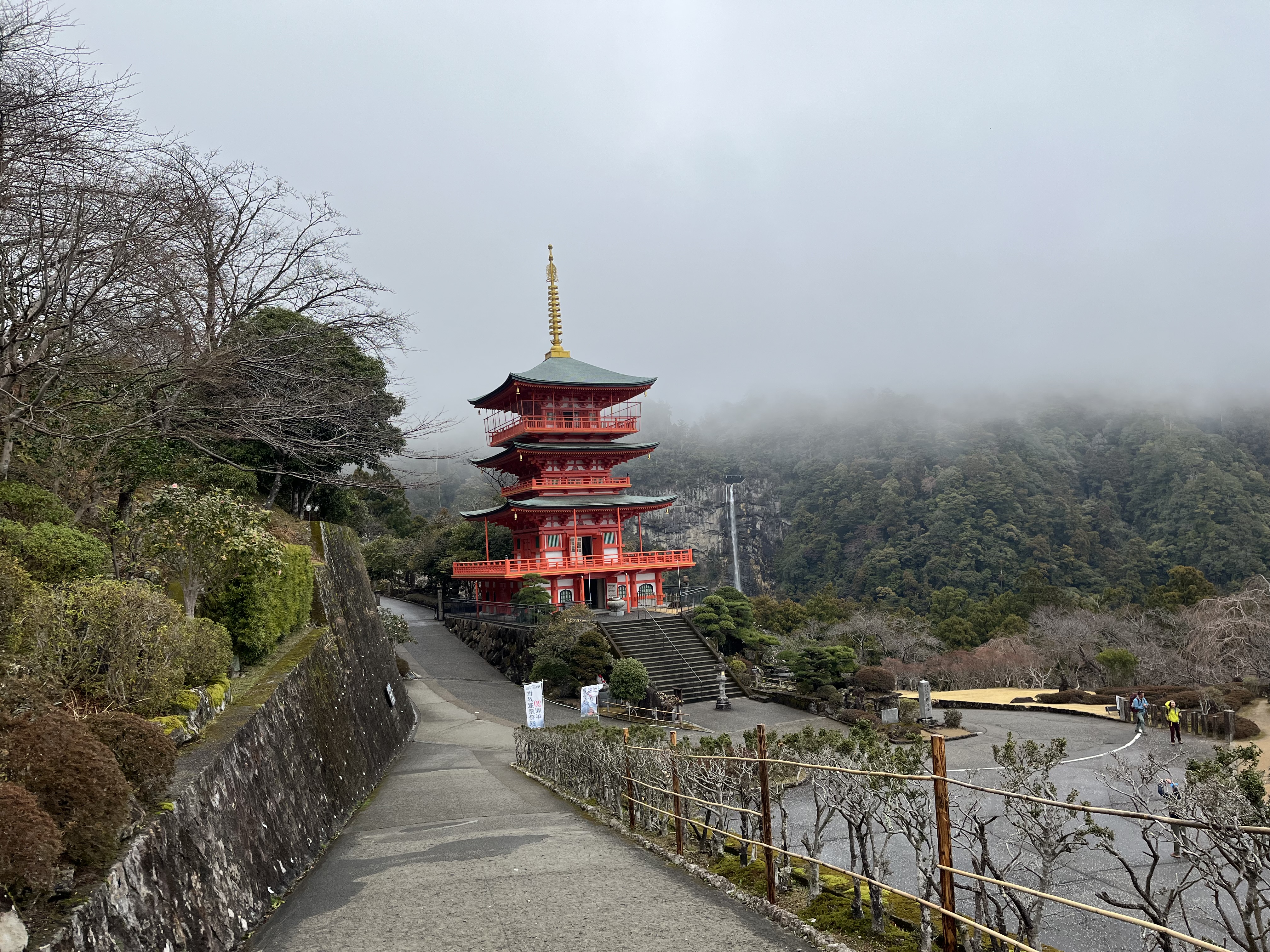
We were teased with the possibility of a glimpse of the Pacific Ocean however the rain and cloud had other thoughts. No matter, the rest of the day was a gentle joy as our clothes dried after the rain eased and we made our way gingerly towards Nachi Taisha shrine, Seiganto-ji temple and the stunning Nachi-no-Otaki waterfalls.
A taxi took us to our opulent coastal hotel at Kii-Katsuura and after a tough but rewarding day, the ocean view from our balcony helped ease our tired limbs. As did an onsen bath, a few cold beers and a succulent slab of Wagyu beef for dinner.
Day Eight
The start to our penultimate day was a little bit fishy as we had an early morning visit to Japan’s largest tuna auction. The vision of hundreds of huge fish being dragged around with a large hook in the mouth was both fascinating and disturbing.
We then caught a train to Shingu where we had a special blessing at the last of the three Kumano Shrines, Hayatama Taisha.
Our final steep climb of the trip took us to the top of the Mt. Gongen, a short and exhilarating scramble up to Gotobiki-iwa, a huge rock revered as the place where the first Kumano deities descended to earth.
After fending off a red kite that had tried to nick my egg sandwich I sought sanctuary in a train as we headed to our final destination, Ise.
We explored Geku, Ise’s outer shine before the real deal, the inner shrine on our last day.
Our exceptional guide, Tom, took us out for our last supper ordering tempura mushroom, deep fried burdock (minus dandelion), fish omelette and succulent chicken skewers. Plenty of sake and large beers might also have been imbibed – I’m not at liberty to divulge the excesses of our last night together.
Having had such a variety of experiences I felt as though our first meal together in Osaka was a lifetime ago. A sad/happy evening was enjoyed by all as we prepared for the final day.
Day Nine
We ended our expedition at Naiku, Ise’s inner shrine where Obama was famously photographed on the steps during a G7 summit.
It was a gentle and poignant end to our time together and I finished by gathering the thoughts of my fellow pilgrims.
As my new friends shared what the experience has meant to them I couldn’t help thinking again of the John Muir quote,
“We are now in the mountains and they are in us, filling every pore and cell of us”
Reflections from the trail
Libby from Melbourne
“It was a chance to experience Japan’s warmth and hospitality coupled with the mist in the mountains. A good test of endurance, getting back to being yourself and getting away from the modern-day ideals that are ingrained in us.”
Kathleen from North Carolina
“I had a sense of connection with other people, doing something that was quite difficult but sharing that with others. Connecting with nature and something bigger than ourselves. It is still possible to have powerful experiences in life away from our day to day lives which gives you great perspective on life.”
Zita from New Zealand
“I loved the combination of the people, the shared experience and the alone time when you can think about things. A great re-set.”
Kay from Melbourne
“It was a totally different environment from Australia, the trees and the mist made for a special atmosphere. I was pleased I survived a multi-day walk – I’d never done that before.”
David from North Carolina
“For me it was the adventure of experiencing a totally new culture through religion, food and the physical environment. I enjoyed the physical challenge, the moments of hardness and the relaxation afterwards. I felt a deep connection to the culture and my fellow adventurers. It rekindled the enjoyment of these adventures at a time when I might be able to do more as I approach retirement”
Tour guide Tom
“I often wonder what people are thinking about. At end of the day they often say that silence and thought is their favourite bit. It’s one of the big things I get out of the job – seeing people chatting and laughing together almost like family a week after they’ve only just met for the first time, bonding through the experience. I read somewhere the difference between tourism and a pilgrimage is a certain element of suffering people have gone through together, that everybody has supported each other and people have been touched by each other’s kindness which has contributed to the cohesiveness of that group. This is a really unknown part of Japan for westerners and it feels really special every time I come here.”
One last thought
I’ve been all over the world enjoying unusual and rewarding adventures and this one is right up there.
I endorse all the observations of my fellow travellers but if I had to pick out one special element it would be those precious hours spent walking alone in silence. The hypnotic Cedar, Cypress and Camphor trees become your constant companions, a kaleidoscope of comfort in your peripheral vision.
My “busy” mind means meditation doesn’t come easily but high up amongst my forest friends I achieved it.
The meaningful nature of this adventure is echoed by the ethos of Walk Japan who for nearly two decades have been investing in rural areas with farming projects, revitalising vacant properties and providing English tuition to locals. The Kumano is just one of many adventures Walk Japan offer across the country.
So, will I be back?
I’ll give you a clue in the words of my mountaineering guru John Muir:
“In every walk with nature, one receives far more than he seeks.
The mountains are calling and I must go.”